


Four approaches cover most households: angled shelving for closets, a cubby bench for entryways, hanging or over-the-door organizers for renters who cannot drill into walls, and clear stackable boxes for shoes you wear only a few times a year. Each solves a different problem: floor space, daily access, lease restrictions, or long-term protection.
TL;DR:
- Angled closet shelves maximize storage by allowing more pairs per square foot, especially for flats and sneakers, but are less suitable for tall boots.
- Open entryway benches with cubbies promote faster shoe access and better airflow while avoiding moisture buildup common with enclosed cabinets.
- Under-bed drawers and vertical towers are ideal for small spaces, offering long-term storage for seasonal or seldom-worn shoes without occupying floor area.
- Safety in households with children or pets requires anchoring tall racks, avoiding glass-front cabinets, and storing small or chewable shoes higher up.
- Custom closet designs that measure and plan around your specific shoe collection provide the best long-term flexibility and space utilization.
Table of Contents
- Quick glance: shoe storage ideas by room and situation
- Entryway and mudroom solutions: benches, trays, and durable designs
- Closet and walk-in solutions: angled shelves and pull-outs by shoe size
- Small-space solutions: under-bed, vertical, and door-mounted storage
- DIY builds and materials: what to use and what to skip
- Care, ventilation, and odor control for stored shoes
- How to choose the right shoe storage: a short checklist
- Safety considerations for shoe storage with kids and pets
- When a custom, measured build pays off
- Get a shoe storage system built for your exact closet
- Sources
- FAQ
Quick glance: shoe storage ideas by room and situation
Some ideas work everywhere, others are built for a single job. Scanning by room and constraint gets you to the right fix faster than browsing every option in order.
- Angled closet shelves: fit more pairs per square foot; best for dedicated closets, less useful for tall boots.
- Entryway bench with cubbies: doubles as seating and daily drop zone; needs a moisture-friendly finish.
- Over-the-door organizer: no tools or drilling; great for renters, limited to lighter shoes.
- Clear stackable boxes: protects seasonal shoes from dust; stacks can topple if too tall.
- Under-bed drawers: use dead space; best for shoes you grab only occasionally.
- Vertical shoe tower: narrow footprint, cubby sizes vary; good for small bedrooms.
- Wall-hung rack: keeps floors clear; limited to a handful of pairs per rack.
- Pull-out closet drawers: hides shoes behind cabinetry; costs more than open shelving.
- DIY plywood shelf: cheap and customizable; takes tools and a weekend.
- Bamboo stackable rack: fast setup, no tools; less durable than built-in shelving.
- Furniture-style cubby tower: blends with decor; bulkier than a slim rack.
- Bench with bottom tray: catches dirt and wet soles; needs regular wiping.
Entryway and mudroom solutions: benches, trays, and durable designs
An open-front bench with cubbies or a shoe tray is usually the better call for entryways because closed cabinets trap moisture from wet soles and slow down the daily habit of dropping shoes on the way in. Open storage also lets you see at a glance what is missing before you head out the door.
Materials matter more here than anywhere else in the house. Sealed wood, treated MDF, or a bench with a removable tray handles rain, mud, and salt far better than raw particleboard, which swells and warps with repeated moisture exposure.
- Choose a bench with a slatted or perforated bottom shelf so air moves under wet shoes.
- Add a rubber or plastic tray liner under the cubby zone to catch drips before they reach the wood.
- Skip fully enclosed cabinets in wet climates unless you add a vent gap or louvered doors.
Enclosed cabinets make sense when the entryway is small and shoes need to stay out of sight for guests, but they only work well with a ventilation gap at the top or bottom.
Pro Tip: Let wet shoes air out on the tray for an hour before tucking them into a closed cubby, even a well-ventilated one.

Closet and walk-in solutions: angled shelves and pull-outs by shoe size
Angled shelving is the single change that packs the most pairs into a closet without adding depth. Slanting a shelf 15 to 20 degrees lets the toe of one shoe nest under the heel of the pair above it, which is why angled shoe shelves pack noticeably more pairs per square foot than flat shelving of the same size. That single geometry trick is why closet designers reach for slanted shelving before anything else.
Vertical clearance depends on what you are storing. Flats and sandals need less headroom than sneakers, and tall boots need a dedicated cubby rather than a shelf.
Cubbies work best when everyone in the house has a fixed number of pairs and wants a dedicated spot. Adjustable shelves suit households whose shoe collection changes with the seasons, and pull-out racks are worth the extra cost when you want shoes hidden behind a closet door.
Small-space solutions: under-bed, vertical, and door-mounted storage
None of these use floor footprint, which makes them the default for studio apartments, kids’ rooms, or any closet that is already full.
- Under-bed containers: choose sliding bins for shoes you rotate seasonally, and drawer-style units with dividers if you need to grab specific pairs often.
- Vertical shoe towers: a narrow footprint against a wall works in bedrooms where floor space is tight, and modular towers with cubbies sized for sneakers, flats, and boots can be combined into a larger storage wall as your collection grows.
- Door-mounted racks and hanging organizers: no drilling required, which makes them the go-to for rentals; keep them for lighter shoes since heavy boots stretch the pockets over time.
- Everyday access rule: keep your five or six most-worn pairs on an open shelf or by the door, and route everything else into under-bed or vertical storage.
DIY builds and materials: what to use and what to skip
A basic shelf build is one of the cheapest shoe storage upgrades you can make, and the material choice decides whether it lasts. Plywood and bamboo hold up to repeated weight and moisture far better than cardboard, which sags and crumbles within a season under daily shoe traffic.
- Measure your closet or wall space and sketch shelf count and spacing before cutting anything.
- Cut plywood or bamboo panels to depth, angling the cut edge 15 to 20 degrees if building slanted shelves.
- Choose your support method: cleats are forgiving and let you adjust shelf height later, while dado joints are stronger but demand more precise cuts and tools.
- Sand edges, add a non-slip liner where heels will rest, and finish with paint or sealant for moisture resistance.
That build sequence and the cleat-versus-dado tradeoff come from a real plan for small-space shoe closets, which also recommends the liner as a simple way to stop angled shoes from sliding.
If a weekend of cutting and sanding is not appealing, pre-made bamboo racks and stackable boxes deploy in minutes and often cost less once you factor in your own time against a basic plywood build.
Pro Tip: Add adjustable shelf supports even to a simple build so you can change spacing when boot season arrives.
Care, ventilation, and odor control for stored shoes
Always let shoes dry fully before putting them away. Sealing damp shoes in a closed cabinet traps moisture against the material, which is a common cause of lingering odor and, over time, damage to leather.
- Air shoes out for an hour or two after wear before storing them.
- Add a cedar block or cedar shoe tree to absorb moisture and odor in enclosed spaces.
- Leave a ventilation gap in any closed cabinet, even a small louvered vent or a gap under the door.
- Reserve airtight boxes for clean, fully dry seasonal shoes, not daily-wear pairs.
Moisture and inadequate airflow are the main drivers of shoe odor and material breakdown, which is why open shelving or a ventilated cabinet beats a sealed box for anything you wear regularly.
How to choose the right shoe storage: a short checklist
Work through these steps in order and you will land on the right setup without overbuying.
- Measure the width, depth, and height of the space you have available.
- Count your shoes by type: flats, sneakers, ankle boots, tall boots, and how often you wear each.
- Rank your priorities: daily access, protection from moisture and dust, total capacity, and how much time or budget you want to spend.
- Match the scenario to the solution: renters lean toward door-mounted racks, family entryways need an open bench with a tray, and a dedicated closet is where angled shelving or a pull-out system earns its keep.
Safety considerations for shoe storage with kids and pets
Shoe storage in a home with children or pets needs a different set of checks than a single-person apartment. Open shelving at floor level puts laces, small buckles, and rubber soles within reach of toddlers and dogs that chew, so keep low shelves for shoes only and store anything with small removable parts higher up.

Freestanding towers and tall racks should be anchored to the wall or built with a wide, stable base. A top-heavy shoe tower is an easy thing for a climbing toddler or an excited dog to tip over, and cubby furniture without a wide footprint is the most common culprit.
Avoid glass-front cabinets in entryways used by young kids, since a dropped shoe or an accidental bump can crack a panel. Choose closed wood or laminate doors instead if you want an enclosed look.
Cedar blocks and other odor-control additions are generally safe, but keep any loose sachets or moisture-absorbing packets out of reach if pets tend to chew on fabric pouches. A bench with a hinged lid should have a soft-close hinge or a support arm so it cannot slam on small fingers.
Finally, keep walkways clear. A shoe rack or bench that narrows a hallway becomes a tripping hazard, especially for young kids running through the house or older family members with balance concerns.
When a custom, measured build pays off
Off-the-shelf shelving assumes average shoe sizes and average closets, and most closets are not average. A custom system solves that by measuring your actual space, your tallest boots, and your daily-access pairs before anything gets built. We design every project in 3D, manufacture locally, quote each job with itemized pricing, install with our own crew, and back the work with a 10-year warranty. A common fix we see: a closet with wasted vertical space above flat shelves, reworked into angled shelving with a dedicated boot cubby that finally fits everything.
— Gary Pavitt
Get a shoe storage system built for your exact closet
A cubby bench or a stack of clear boxes solves the problem today, but it will not adjust when your boot collection grows or your closet gets a new tenant. Shoe storage layouts designed around the exact width, depth, and shoe count, often include 3D design consultations and itemized pricing to clarify costs before work begins.
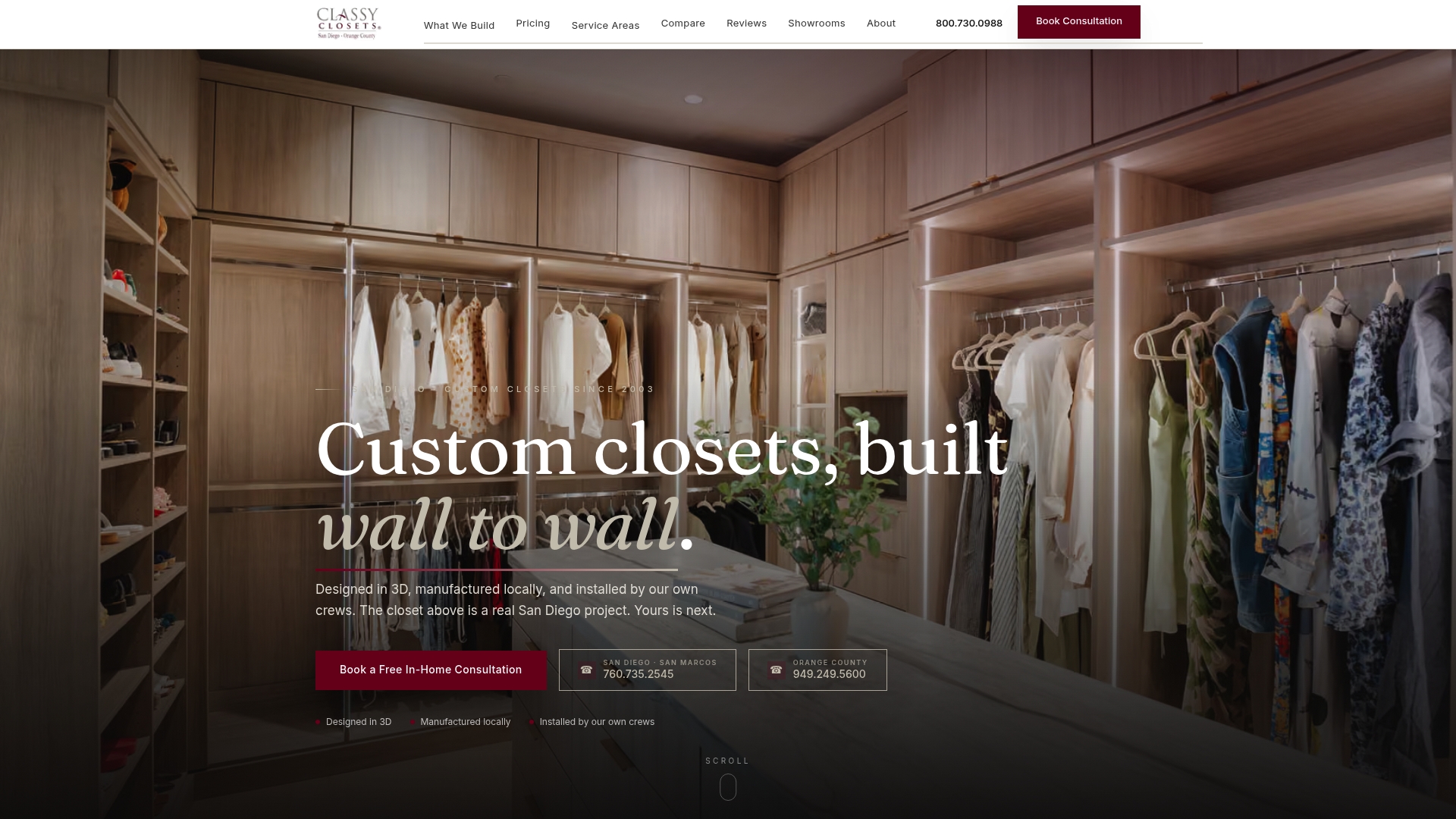
Projects are typically built locally and installed by a dedicated installation crew, often backed by a workmanship warranty. If your closet needs more than a shelf, whether that is a full walk-in closet design or a simpler custom closet built around your shoe collection, request a free consultation to get a measured plan and a firm quote.
Sources
- DIY Shoe Closet: A Real Plan for Small Spaces
- Shoe Storage Tower with Cubbies — Free Woodworking Plans
- DIY Shoe Storage Ideas for Small Spaces and Closets - Tidy Home Guide
FAQ
What is the best way to store a lot of shoes?
Angled closet shelving fits the most pairs into the least floor space because the toe of one shoe tucks under the heel of the pair above it. Pair that with a cubby or bin system for boots and off-season shoes to keep everything sorted by type.
What are some creative ways to store shoes?
Furniture-style cubby towers can be trimmed or painted to match your decor while keeping shoes accessible, unlike a plain wire rack. Wall-hung racks, under-bed drawers, and repurposed bookshelves with dividers are other options that turn storage into part of the room’s design.
How do you store shoes with no space?
Under-bed containers and door-mounted or over-the-door organizers use space you already have without touching the floor. Vertical shoe towers pushed against a single wall also work well in small bedrooms or apartments where a full closet system is not possible.
What is the best way to store shoes in a closet?
Measure your shoe types first: flats, sneakers, ankle boots, and tall boots each need different shelf depth and vertical clearance. Angled shelves suit flats and sneakers, while a dedicated tall cubby or pull-out rack works better for boots that will not fit under a standard shelf.


